

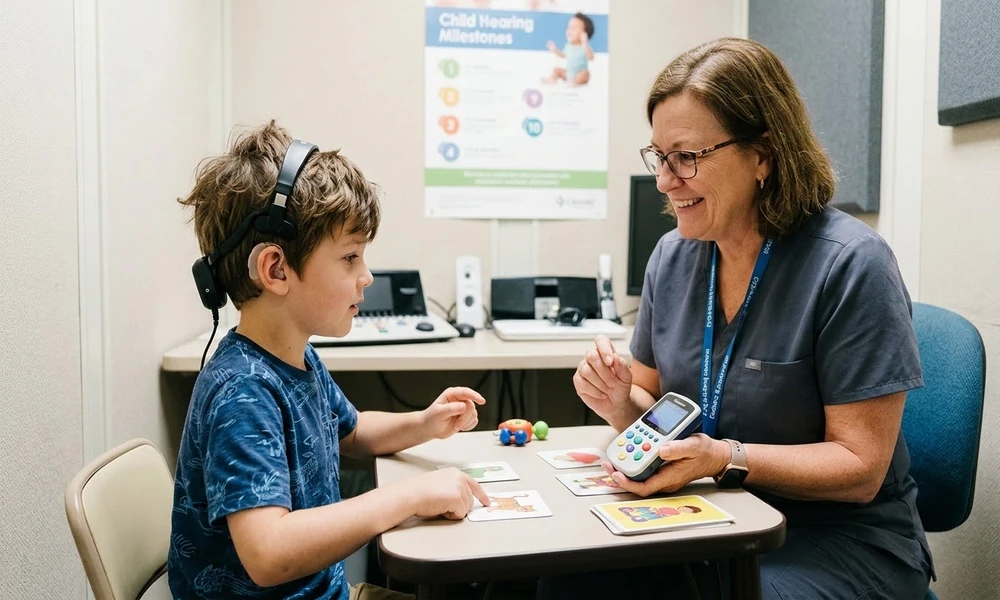
Communication plays a major role in a child’s development. Through listening, responding, asking questions, and using language, children learn how to connect with others and make sense of the world around them. When communication challenges show up, they can affect learning, behavior, confidence, and social relationships.
Hearing health is closely connected to this process. A child does not need to have complete hearing loss for communication to be affected. Even mild, temporary, or inconsistent hearing difficulties can make it harder to understand speech, follow directions, or develop clear language patterns. When parents, caregivers, teachers, and healthcare professionals understand this connection, they can spot concerns earlier and respond with practical support.
Early Signs That May Point to Communication or Hearing Concerns
Some children with hearing-related communication challenges may seem distracted, quiet, or slow to respond. Others may speak loudly, ask people to repeat themselves often, or struggle to follow conversations in busy environments. These signs can be easy to mistake for behavior issues, especially in classrooms, daycare settings, or family gatherings where background noise is common.
Language delays can also be an early clue. A child may use fewer words than expected, have trouble forming sentences, or struggle to pronounce certain sounds. Some children may hear well in quiet spaces but miss important speech sounds when there is noise, distance, or more than one person talking.
Parents and caregivers should also watch for changes over time. A child who was once responsive but begins ignoring instructions, turning up the volume, or pulling away from conversations may need a hearing check. Early attention can keep small concerns from becoming bigger academic or social challenges.
How Hearing Supports Language Development
Children learn language by hearing it again and again in everyday life. They listen to parents naming objects, siblings telling stories, teachers giving instructions, and peers playing together. These repeated sound patterns help children understand vocabulary, grammar, rhythm, and tone.
When hearing is reduced, unclear, or inconsistent, the brain receives incomplete information. A child may miss soft sounds, word endings, or small differences between similar words. Over time, this can affect speech clarity, reading readiness, and listening comprehension.
A child’s communication environment is also shaped by the wellness of the adults around them. For example, fathers or male caregivers who want to maintain energy, manage weight, and stay active may seek support from services such as EveresT Men’s Health, a men’s health clinic that also addresses weight loss for men. While this type of care is focused on adults, caregiver wellness can influence how consistently adults engage in reading, conversation, outdoor play, and daily routines that support a child’s communication growth.
Common Causes of Hearing-Related Communication Difficulties
One common cause of hearing difficulty in children is fluid in the middle ear, often linked to ear infections. This can create temporary hearing changes that come and go. Because the changes are not always constant, adults may not realize right away that the child is missing parts of speech.
Other children may have permanent hearing loss from birth or develop hearing loss later because of illness, injury, genetics, or exposure to loud sounds. Some children pass a newborn hearing screening but still develop hearing concerns as they grow. That is why ongoing observation matters.
Hearing challenges can also overlap with speech-language disorders, autism spectrum disorder, attention difficulties, or learning differences. In these situations, a child may need support from more than one type of professional. A hearing evaluation can help clarify whether hearing is part of the concern or whether other developmental factors are more likely involved.
The Role of Chronic Conditions and Whole-Family Health
Children do not develop in isolation. Family health, routines, stress levels, and access to care all shape the environment where communication grows. When a household is managing chronic conditions, frequent appointments, mobility limitations, or caregiver fatigue, it can be harder to maintain consistent, language-rich routines.
Primary care can help families coordinate concerns across different areas of health. For example, Grand Forks Clinic (https://grandforksclinic.com) is associated with primary care services and chronic disease management. In a broader family-health context, this kind of care can support adults who are managing ongoing conditions while also helping families stay organized around preventive visits, referrals, and wellness goals.
For children with communication or hearing concerns, stable routines are especially helpful. Reading at bedtime, describing daily activities, encouraging turn-taking in conversation, and reducing unnecessary background noise can all support listening and language development. These habits do not need to be complicated, but they do need consistency.
Why Early Screening and Evaluation Matter
Hearing screening is a simple but important step when communication concerns appear. It can help show whether a child is hearing speech clearly enough for learning and social interaction. If screening results suggest a concern, a more detailed evaluation may be recommended.
Speech-language evaluations are also helpful when a child has trouble expressing ideas, understanding instructions, or using age-appropriate sounds and sentences. These assessments can help identify whether the concern is mostly related to hearing, language processing, articulation, attention, or another developmental factor.
Early support can make a meaningful difference. Children who receive timely hearing care, speech therapy, classroom accommodations, or family guidance may have an easier time catching up. Waiting too long can increase frustration and make communication patterns harder to change.
Movement, Posture, and Participation in Daily Communication
Physical comfort and mobility can affect communication more than many people realize. Children communicate through the whole body. They turn toward speakers, join group play, sit for story time, and participate in classroom activities. Pain, posture issues, or mobility challenges can make those everyday interactions harder.
The same can be true for adults who support children. Parents, grandparents, and caregivers with back pain or reduced mobility may find it harder to sit on the floor, attend school events, drive to appointments, or stay physically active with children. In adult care settings, CalSpine MD provides orthopedic spine care and mobility support through spine surgeon services. While spine care is not a direct treatment for childhood hearing or speech concerns, adult mobility support can help caregivers stay involved in the daily activities that encourage communication.
Active play also supports language. Children learn words through movement, exploration, and shared attention. A walk outside, a trip to the playground, or a simple game of catch can create natural opportunities for naming, asking, answering, and storytelling.
Classroom and Social Effects of Missed Communication
Children with hearing or communication challenges may struggle in school even when they appear capable in other areas. They may miss instructions, misunderstand questions, or have trouble keeping up during group discussions. This can lead to lower participation, incomplete work, or frustration.
Missed communication can also affect friendships. A child who does not hear clearly may respond in ways that seem unrelated or may avoid group play because conversations move too quickly. Other children may misread this as disinterest, shyness, or rudeness.
Teachers can make a major difference with simple supports. Seating the child closer to instruction, reducing background noise, checking for understanding, using visual cues, and communicating with families can help. These steps are not a substitute for evaluation, but they can reduce daily barriers while the child receives appropriate support.
Supporting Independence Through Caregiver Involvement
Children build communication confidence when adults give them time, attention, and chances to practice. This includes listening patiently, expanding on what the child says, and encouraging the child to ask for clarification when something is unclear. These skills support independence both at home and in school.
Some families also rely on outside help when caregiving needs are complex. Alpenglow Homecare NM offers personal caregiver and companionship services, which may be relevant for households where adults need support with daily routines. In a family setting, reliable caregiving support can help preserve structure, reduce stress, and create more consistent opportunities for communication.
Independence does not mean leaving children to manage challenges on their own. It means teaching them age-appropriate tools. A younger child might learn to say, “Can you say that again?” or “I didn’t hear you.” Older children may learn to manage hearing devices, advocate for classroom seating, or explain their needs to trusted adults.
Practical Steps Families Can Take at Home
Families can support communication by making listening easier. Turning off the television during conversations, speaking face-to-face, and getting the child’s attention before giving instructions can all help. These habits are useful for every child, and they are especially important when hearing concerns are possible.
Reading aloud is another powerful tool. Books expose children to new words, sentence patterns, and ideas. Adults can pause to ask questions, describe pictures, and connect stories to real life. Even a few minutes a day can support language development over time.
Families should also keep track of concerns. Writing down examples, such as when the child asks for repetition, misses instructions, or struggles in noisy places, can help healthcare providers understand the pattern. This information may guide decisions about hearing tests, speech evaluations, school supports, or referrals.
The Bottom Line
Communication challenges and hearing health are deeply connected in childhood. When a child cannot hear clearly or consistently, language development, learning, behavior, and social confidence may all be affected. At the same time, not every communication concern is caused by hearing loss, which is why careful observation and proper evaluation matter.
Families, teachers, and healthcare professionals can work together to identify concerns early and create supportive environments. Simple steps such as reducing background noise, reading daily, encouraging clear communication, and seeking timely evaluations can make a real difference. With the right support, children can build stronger communication skills and participate more fully in everyday life.

